
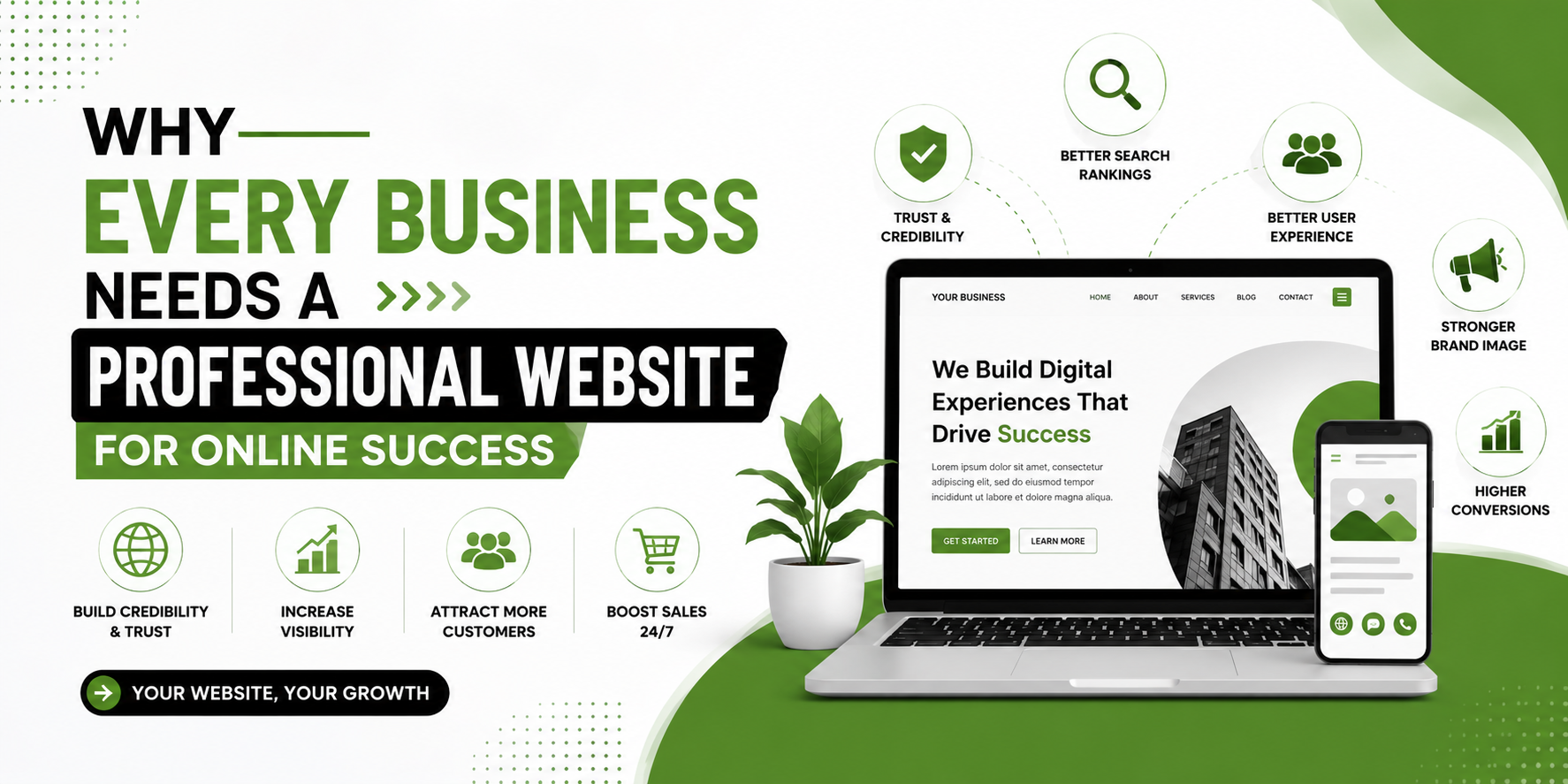
In today’s digital world, your website is often the first interaction a potential customer has with your business. Whether you run a startup, local service, e-commerce store, professional consultancy, or growing company, a professional website can help you build credibility, attract customers, and generate new business opportunities.
A website is no longer just an online brochure. It can become a 24/7 marketing, sales, customer-support, and business-growth platform.
1. Build Trust and Credibility
Customers want to know whether a business is genuine and professional before making a purchase or contacting a company.
A well-designed website can showcase:
- Company information
- Products and services
- Customer reviews
- Portfolio and case studies
- Contact details
- Certifications and achievements
- Frequently asked questions
A professional online presence can give potential customers greater confidence in your business.
2. Your Business Is Available 24/7
Unlike a physical office, your website doesn’t close at the end of the working day.
Customers can visit your website at any time to:
- Learn about your services
- Browse products
- Submit enquiries
- Book appointments
- Request quotations
- Read your content
- Contact your team
This means your website can continue working for your business even when your team isn’t available.
3. Reach Customers Beyond Your Local Area
A physical location limits how far your business can reach.
A website allows potential customers from different cities, states, and even countries to discover your business.
With the right combination of SEO, content marketing, social media, and online advertising, your website can become a powerful customer-acquisition channel.
4. Generate More Leads
A professional website should be designed to convert visitors into potential customers.
Effective websites can include:
- Contact forms
- WhatsApp buttons
- Call buttons
- Enquiry forms
- Booking systems
- Quote-request forms
- Newsletter subscriptions
- Product enquiry options
A clear Call-to-Action (CTA) tells visitors what to do next.
For example:
Get a Free Consultation
Request a Quote
Book a Demo
Contact Us Today
5. Support Your Digital Marketing Strategy
Your website is the foundation of many online marketing activities.
For example:
Google Search → Website → Landing Page → Enquiry → Customer
Your website can work alongside:
- SEO
- Google Ads
- Social media
- Email marketing
- Content marketing
- WhatsApp marketing
- Influencer marketing
Without a strong website, businesses may struggle to convert traffic generated from these channels.
6. Showcase Your Products and Services
A website gives you complete control over how your products and services are presented.
You can provide detailed information about:
- Features
- Benefits
- Pricing
- Specifications
- Images
- Videos
- Customer reviews
- FAQs
This helps customers understand your offering before they contact your sales team.
7. Improve Customer Experience
Modern customers expect businesses to provide information quickly.
A good website should be:
Fast + Mobile-Friendly + Easy to Navigate + Secure + Informative
Visitors should be able to find what they need without unnecessary steps.
A poor user experience can cause visitors to leave before contacting your business.
8. Mobile-Friendly Design Is Essential
A large portion of internet activity happens on smartphones.
Therefore, your website should work smoothly across:
- Smartphones
- Tablets
- Laptops
- Desktop computers
Responsive design ensures that content, images, buttons, menus, and forms adapt to different screen sizes.
9. Improve Search Engine Visibility
A professional website can become the foundation of your SEO strategy.
Businesses can create optimized pages around relevant searches and publish helpful content through a blog.
For example:
Service Page → “Website Development Services”
Blog → “How Mobile Apps Help Businesses Increase Sales”
Over time, useful content can help businesses attract people who are actively searching for solutions related to their products or services.
10. Compete With Larger Businesses
A strong website can help a small business present itself professionally alongside much larger competitors.
With good design, clear messaging, strong content, SEO, and excellent customer experience, startups can create a powerful digital presence without needing a huge physical infrastructure.
11. Measure Your Marketing Performance
One major advantage of a website is the ability to measure digital activity.
Businesses can track information such as:
- Website visitors
- Traffic sources
- Popular pages
- Search queries
- Form submissions
- Conversion rates
- Campaign performance
This data can help businesses understand what is working and where improvements are needed.
12. Prepare Your Business for the Future
Technology continues to change rapidly.
A modern website can be connected with:
- CRM systems
- Payment gateways
- AI chatbots
- Marketing automation
- Analytics platforms
- Booking systems
- E-commerce platforms
- Customer databases
This turns a website from a simple information page into a connected business platform.
What Makes a Professional Website?
A successful business website should focus on more than attractive design.
It should combine:
Professional Design + Strong Content + SEO + Speed + Security + Mobile Responsiveness + Conversion Optimization
Every element should have a purpose: help visitors understand your business and take action.
Conclusion
A professional website is no longer optional for businesses that want to build a strong digital presence.
It can help you build trust, reach new customers, generate leads, showcase your services, support marketing campaigns, and create long-term business growth.
Your website should not simply exist online.
It should work for your business.
Growth with Tech
Build Smarter. Automate Faster. Grow Further.